

Während der Schwangerschaft verändert sich der Körper auf vielen Ebenen. Auch das Zahnfleisch reagiert in dieser Zeit oft empfindlicher auf bakterielle Beläge. Viele Patientinnen bemerken plötzlich Zahnfleischbluten, Schwellungen, empfindliches Zahnfleisch oder Mundgeruch, obwohl sich ihre Mundhygiene nicht wesentlich verändert hat.
In vielen Fällen handelt es sich zunächst um eine Schwangerschaftsgingivitis – also eine hormonell begünstigte Zahnfleischentzündung. Diese ist häufig gut behandelbar und bildet sich nach der Geburt meistens wieder zurück. Wichtig ist jedoch, zwischen einer oberflächlichen Zahnfleischentzündung und einer echten Parodontitis zu unterscheiden.
Eine Parodontitis betrifft nicht nur das Zahnfleisch, sondern den gesamten Zahnhalteapparat. Dabei können Zahnfleischtaschen, Knochenabbau und langfristig Zahnlockerungen entstehen. Gerade während der Schwangerschaft sollte eine solche Entzündung frühzeitig erkannt und kontrolliert werden.
In der Zahnarztpraxis «Zahnärzte Zürich Gartenstrasse» untersuchen wir schwangere Patientinnen besonders sorgfältig und stimmen Diagnostik, Dentalhygiene und mögliche Behandlungen individuell auf die Schwangerschaft ab.
Das Wichtigste auf einen Blick
✔ Zahnfleischbluten während der Schwangerschaft ist häufig, sollte jedoch immer zahnärztlich abgeklärt werden.
✔ Hormonelle Veränderungen erhöhen die Anfälligkeit für Zahnfleischentzündungen und können eine bestehende Parodontitis verschlimmern.
✔ Eine unbehandelte Parodontitis gilt heute als möglicher Risikofaktor für Frühgeburten und ein niedriges Geburtsgewicht. Sie ist jedoch nur einer von mehreren Einflussfaktoren.
✔ Professionelle Dentalhygiene und nichtchirurgische Parodontitisbehandlungen können während der Schwangerschaft in den meisten Fällen sicher durchgeführt werden.
✔ Regelmässige Kontrollen helfen, Zahnfleischentzündungen frühzeitig zu erkennen und grössere Schäden am Zahnhalteapparat zu verhindern.
✔ Idealerweise wird die Mundgesundheit bereits vor einer geplanten Schwangerschaft kontrolliert und gegebenenfalls behandelt.
Medizinisch geprüft von
Dr. med. dent. Lorenza Dahm
Praxisinhaberin der Zahnarztpraxis Zürich Gartenstrasse (ZZG)
Master of Science (MSc) in Implantology
Dr. Lorenza Dahm beschäftigt sich seit vielen Jahren mit der Prävention und Behandlung von Erkrankungen des Zahnhalteapparates. Zu ihren Behandlungsschwerpunkten gehören Parodontologie, Implantologie, ästhetische Zahnmedizin sowie die langfristige Betreuung von Patientinnen und Patienten mit erhöhtem Parodontitisrisiko.
Die Betreuung schwangerer Patientinnen erfolgt in der Praxis nach aktuellen wissenschaftlichen Erkenntnissen und unter Berücksichtigung der Empfehlungen internationaler Fachgesellschaften wie der European Federation of Periodontology (EFP) sowie der Deutschen Gesellschaft für Parodontologie (DG PARO).
Letzte fachliche Aktualisierung: Juni 2026
Warum eine zahnärztliche Kontrolle in der Schwangerschaft wichtig ist
Zahnfleischbluten wird in der Schwangerschaft häufig als normale Begleiterscheinung wahrgenommen. Tatsächlich ist es zwar häufig, sollte aber nicht einfach ignoriert werden.
Gesundes Zahnfleisch blutet normalerweise nicht. Blutungen weisen meist darauf hin, dass das Zahnfleisch entzündet ist oder empfindlicher auf bakterielle Beläge reagiert.
Eine frühzeitige Kontrolle hilft dabei, zu unterscheiden:
- handelt es sich um eine reversible Schwangerschaftsgingivitis?
- besteht bereits eine Parodontitis?
- liegen Zahnfleischtaschen vor?
- gibt es Zahnstein oder bakterielle Beläge unter dem Zahnfleischrand?
- besteht ein erhöhtes Risiko für ein Fortschreiten der Entzündung?
Je früher die Ursache erkannt wird, desto schonender lässt sich behandeln.
Schwangerschaftsgingivitis oder Parodontitis?
Eine Schwangerschaftsgingivitis betrifft in erster Linie das Zahnfleisch. Das Zahnfleisch ist gerötet, geschwollen und blutet leichter. Der Zahnhalteapparat und der Knochen sind dabei noch nicht geschädigt.
Eine Parodontitis geht darüber hinaus. Die Entzündung betrifft zusätzlich die Haltefasern und den Kieferknochen. Dabei können sich Zahnfleischtaschen bilden, in denen sich Bakterien ansiedeln. Wird die Erkrankung nicht behandelt, kann es langfristig zu Knochenabbau und Zahnlockerungen kommen.
Der Unterschied ist für die Behandlung entscheidend. Während eine Gingivitis meist durch professionelle Zahnreinigung, verbesserte Mundhygiene und engmaschige Kontrollen stabilisiert werden kann, benötigt eine Parodontitis eine gezielte parodontale Therapie.
→ Zahnfleischbluten – Ursachen, Behandlung und Vorbeugung
→ Parodontitis: Ursachen, Symptome und Behandlung
Welche Beschwerden sollten Schwangere ernst nehmen?
Eine zahnärztliche Untersuchung ist besonders sinnvoll, wenn folgende Beschwerden auftreten:
- Zahnfleischbluten beim Zähneputzen
- Blutungen bei Zahnseide oder Interdentalbürsten
- gerötetes oder geschwollenes Zahnfleisch
- anhaltender Mundgeruch
- empfindliche Zahnhälse
- Zahnfleischrückgang
- Druckgefühl am Zahnfleisch
- Schmerzen beim Kauen
- Eiteraustritt aus Zahnfleischtaschen
- Zahnlockerung
Nicht jede dieser Beschwerden bedeutet automatisch eine schwere Erkrankung. Sie sind jedoch wichtige Hinweise, dass Zahnfleisch und Zahnhalteapparat kontrolliert werden sollten.
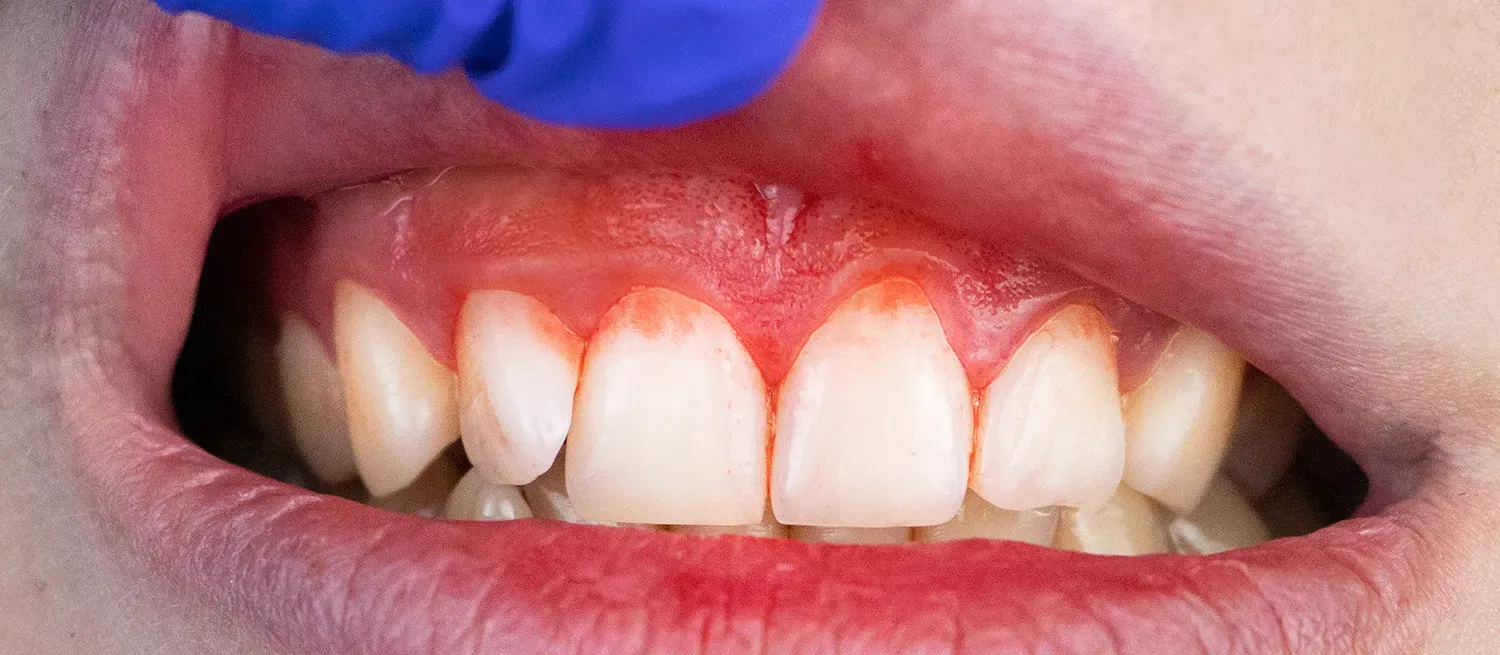
Wie untersuchen wir das Zahnfleisch während der Schwangerschaft?
Bei ZZG erfolgt die Untersuchung schonend und individuell angepasst. Ziel ist es, eine mögliche Entzündung frühzeitig zu erkennen, ohne unnötige Belastung für die Patientin.
Die Diagnostik kann je nach Situation folgende Schritte umfassen:
- Untersuchung des Zahnfleisches
- Kontrolle auf Zahnfleischbluten
- Messung der Zahnfleischtaschen
- Plaque- und Zahnsteinanalyse
- Beurteilung von Zahnfleischrückgang
- Kontrolle von Zahnlockerungen
- Einschätzung individueller Risikofaktoren
- Besprechung der Mundhygiene zu Hause
Röntgenaufnahmen werden während der Schwangerschaft nur durchgeführt, wenn sie medizinisch wirklich notwendig sind. In vielen Fällen kann eine erste Einschätzung bereits klinisch erfolgen.
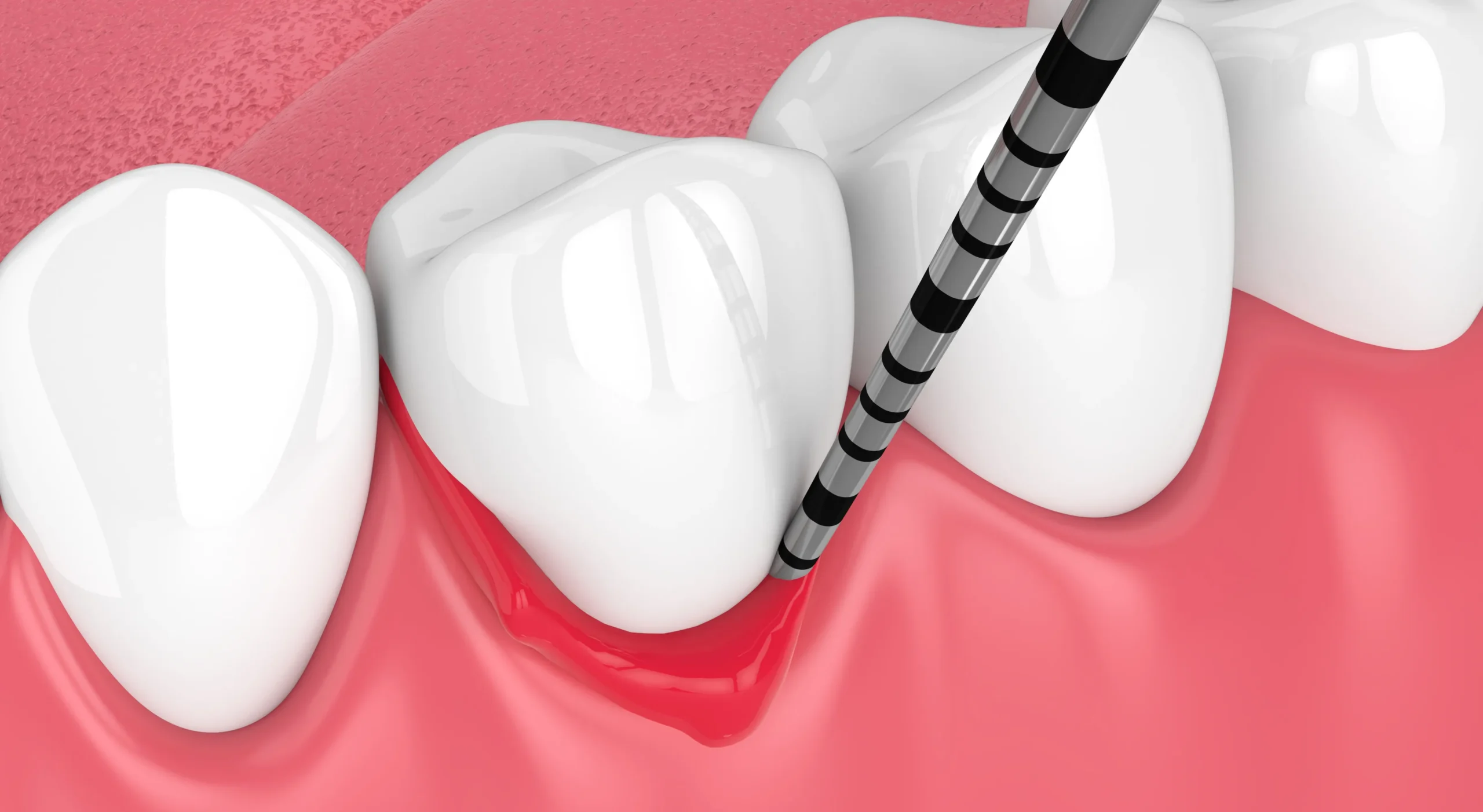
Moderne Risikoabklärung mit aMMP-8-Test
Bei Verdacht auf eine aktive parodontale Entzündung kann ein aMMP-8-Test sinnvoll sein.
Dieser Test misst einen Biomarker, der bei aktivem Abbau von Gewebe im Zahnhalteapparat erhöht sein kann. Dadurch kann er Hinweise geben, ob aktuell eine aktive Zerstörung von parodontalem Gewebe stattfindet.
Der aMMP-8-Test ersetzt die klinische Untersuchung nicht, kann aber ergänzend helfen, das individuelle Risiko besser einzuschätzen und die weitere Behandlung zu planen.
Gerade in der Schwangerschaft kann dies wertvoll sein, weil man möglichst gezielt und schonend entscheiden möchte, welche Massnahmen notwendig sind.
Warum der Zeitpunkt der Behandlung wichtig ist
Nicht jede zahnärztliche Behandlung ist zu jedem Zeitpunkt der Schwangerschaft gleich angenehm oder sinnvoll.
Viele planbare Behandlungen werden bevorzugt im zweiten Schwangerschaftsdrittel durchgeführt. In dieser Phase fühlen sich viele Patientinnen stabiler als im ersten Trimester, und der Bauch ist meist noch nicht so gross wie gegen Ende der Schwangerschaft.
Akute Entzündungen sollten jedoch unabhängig vom Zeitpunkt abgeklärt werden. Unbehandelte Entzündungen können für den Körper belastender sein als eine sorgfältig geplante zahnärztliche Behandlung.
In der Praxis wird immer individuell entschieden, welche Behandlung notwendig, sinnvoll und für die Patientin gut zumutbar ist.
Kann Parodontitis eine Frühgeburt begünstigen?
Der mögliche Zusammenhang zwischen Parodontitis und Schwangerschaftskomplikationen wird seit vielen Jahren intensiv wissenschaftlich untersucht. Heute gilt als gut belegt, dass eine schwere, unbehandelte Parodontitis nicht nur die Mundhöhle betrifft, sondern Auswirkungen auf den gesamten Organismus haben kann.
Bei einer Parodontitis vermehren sich krankmachende Bakterien in den Zahnfleischtaschen. Gleichzeitig produziert der Körper Entzündungsbotenstoffe wie Interleukine, Tumornekrosefaktor (TNF-α) und Prostaglandine, die über die Blutbahn in den gesamten Körper gelangen können.
Diese Stoffe spielen auch bei der Regulation von Schwangerschaft und Geburt eine wichtige Rolle.
Mehrere wissenschaftliche Untersuchungen und Metaanalysen konnten zeigen, dass Frauen mit einer schweren unbehandelten Parodontitis häufiger Schwangerschaftskomplikationen entwickeln als Frauen mit gesundem Zahnfleisch. Dazu gehören unter anderem:
- Frühgeburten
- Kinder mit niedrigem Geburtsgewicht
- Präeklampsie (Schwangerschaftsvergiftung)
- Wachstumsverzögerungen des ungeborenen Kindes
Die European Federation of Periodontology (EFP) sowie die Deutsche Gesellschaft für Parodontologie (DG PARO) weisen deshalb darauf hin, dass eine gute parodontale Gesundheit ein wichtiger Bestandteil der medizinischen Vorsorge während der Schwangerschaft ist. Gleichzeitig betonen beide Fachgesellschaften, dass Parodontitis lediglich einer von mehreren Risikofaktoren ist. Faktoren wie Rauchen, Diabetes mellitus, Bluthochdruck, Übergewicht oder Mehrlingsschwangerschaften beeinflussen das Gesamtrisiko ebenfalls erheblich.
Die wissenschaftlichen Erkenntnisse sprechen daher dafür, bestehende Zahnfleischentzündungen möglichst frühzeitig zu erkennen und zu behandeln – idealerweise bereits vor Eintritt einer Schwangerschaft oder spätestens während der Schwangerschaft im Rahmen einer engmaschigen zahnärztlichen Betreuung.
Ist eine Parodontitis-Behandlung während der Schwangerschaft möglich?
Diese Frage beschäftigt viele werdende Mütter.
Die gute Nachricht lautet:
Ja.
Die meisten nichtchirurgischen Parodontitisbehandlungen können während der Schwangerschaft sicher durchgeführt werden und gelten heute als wichtiger Bestandteil einer umfassenden Gesundheitsvorsorge.
Internationale Fachgesellschaften empfehlen ausdrücklich, bakterielle Entzündungen im Mund nicht unbehandelt zu lassen.
Welche Behandlung sinnvoll ist, hängt jedoch immer vom individuellen Befund und vom Schwangerschaftsverlauf ab.
Welche Behandlungen können während der Schwangerschaft durchgeführt werden?
Je nach Situation kommen verschiedene Massnahmen infrage.
Professionelle Dentalhygiene
Die professionelle Zahnreinigung bildet häufig den ersten Behandlungsschritt.
Dabei werden sorgfältig entfernt:
- bakterielle Beläge
- Zahnstein
- Verfärbungen
- Plaque entlang des Zahnfleischrandes
Zusätzlich erhalten Patientinnen individuelle Instruktionen zur häuslichen Mundhygiene.
Regelmässige Dentalhygienesitzungen können helfen, Zahnfleischentzündungen frühzeitig zu kontrollieren und das Risiko einer Verschlechterung zu reduzieren.
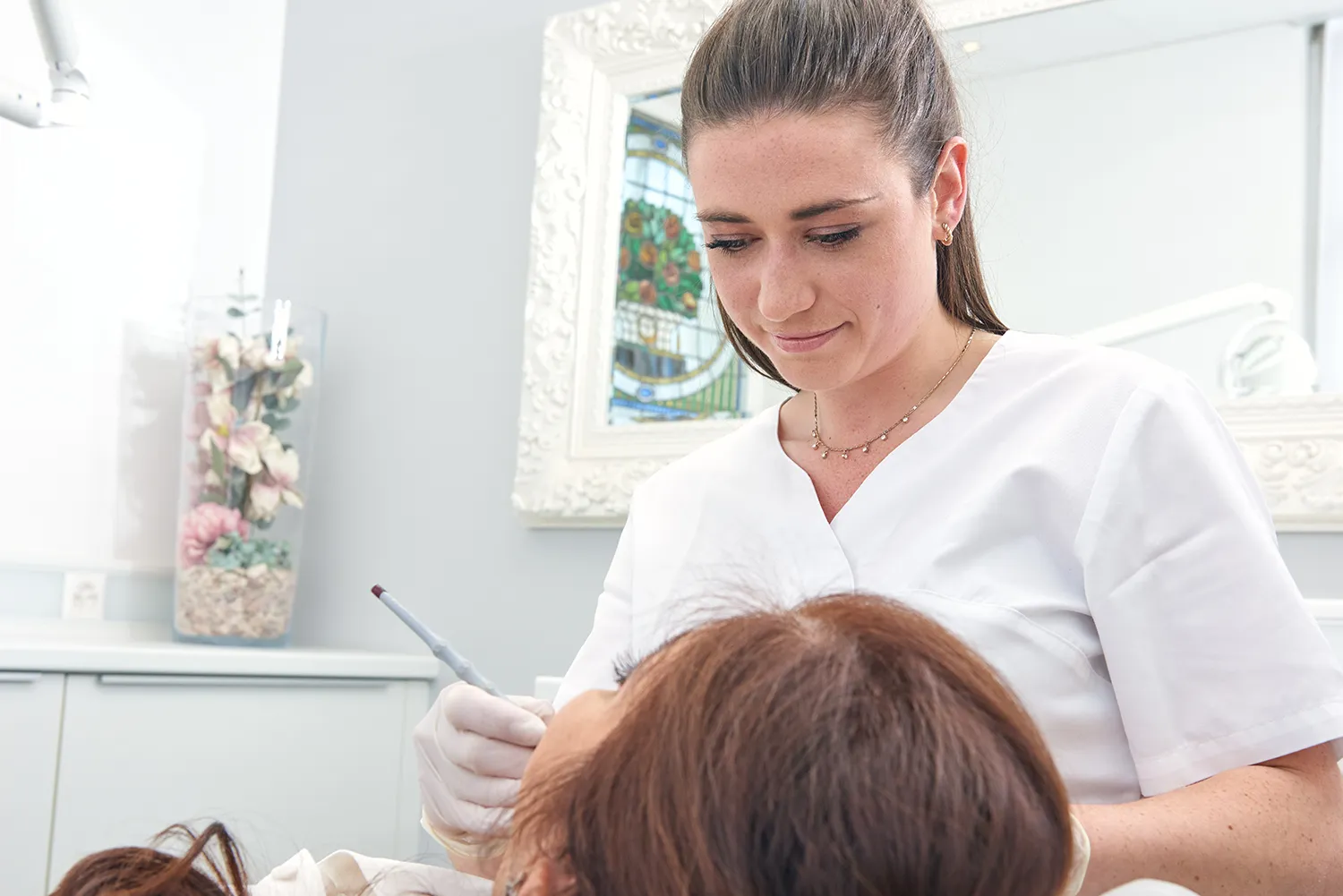
Nichtchirurgische Parodontitistherapie
Werden tiefe Zahnfleischtaschen festgestellt, kann eine sogenannte subgingivale Instrumentierung notwendig werden.
Dabei werden die Wurzeloberflächen unter lokaler Betäubung schonend von bakteriellen Belägen und Biofilm gereinigt.
Ziel ist es,
- die Entzündung zu stoppen,
- die Anzahl krankmachender Bakterien deutlich zu reduzieren,
- die Heilung des Zahnfleisches zu fördern
- und einen weiteren Knochenabbau möglichst zu verhindern.
Diese Behandlung gilt nach heutigem Wissensstand auch während der Schwangerschaft als sicher, wenn sie medizinisch notwendig ist.
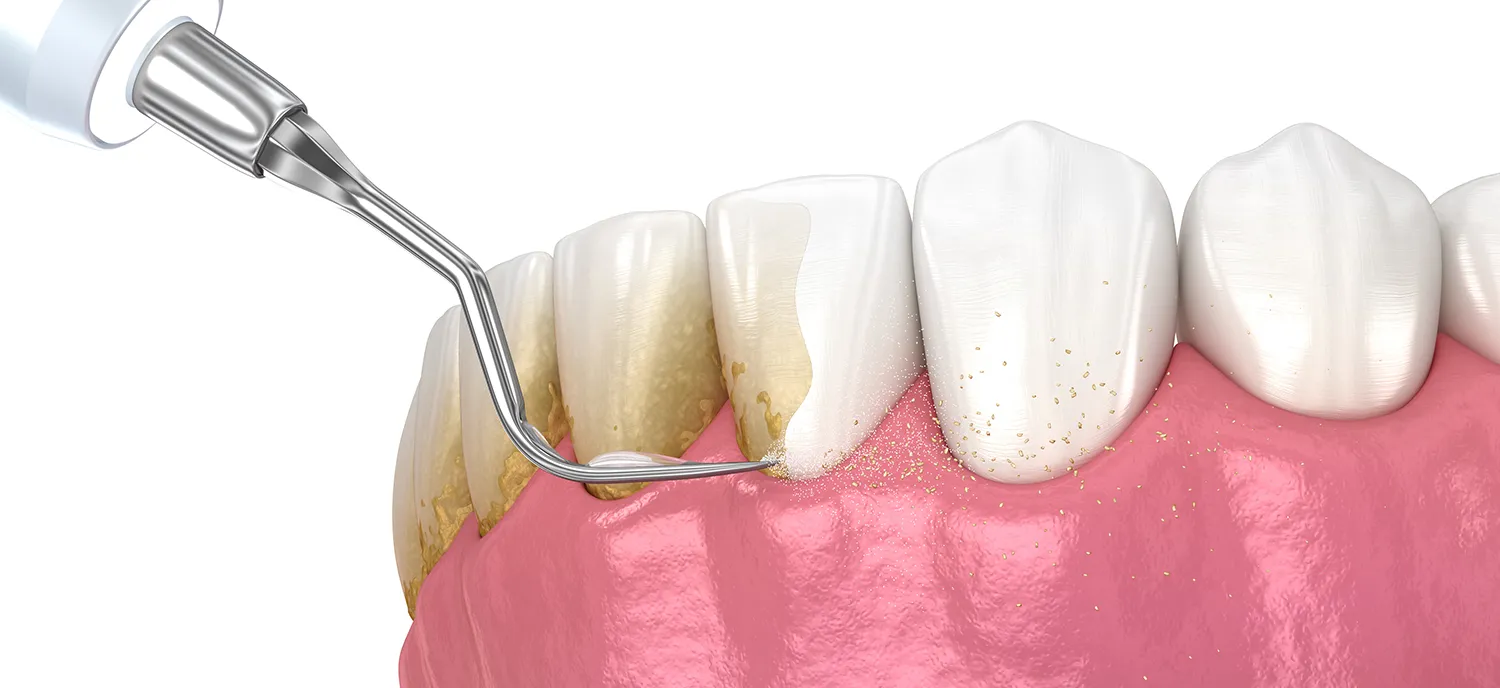
Lokale unterstützende Therapien
Je nach Befund können zusätzlich lokal wirkende Massnahmen sinnvoll sein.
Dazu gehören beispielsweise:
- antibakterielle Spüllösungen
- individuell abgestimmte Mundhygienemassnahmen
- engmaschige Recall-Termine
- lokale entzündungshemmende Therapie
Ob solche ergänzenden Massnahmen notwendig sind, entscheidet der behandelnde Zahnarzt anhand des klinischen Befundes.
Welche Behandlungen werden nach Möglichkeit auf die Zeit nach der Geburt verschoben?
Akute Entzündungen sollten grundsätzlich auch während der Schwangerschaft behandelt werden.
Grössere rekonstruktive oder regenerative Eingriffe werden dagegen – sofern medizinisch vertretbar – meist auf die Zeit nach der Entbindung verschoben.
Dazu gehören beispielsweise:
- mikrochirurgische Rezessionsdeckungen
- Bindegewebstransplantationen
- regenerative Parodontalchirurgie
- Knochenaufbau (Bone Grafting)
- Schmelzmatrixproteine (Emdogain®)
- Hyaluronsäure zur Unterstützung der Gewebeheilung
- Implantationen
Nach Abschluss der Schwangerschaft stehen sämtliche modernen regenerativen Verfahren zur Verfügung, um verloren gegangenes Gewebe möglichst schonend wieder aufzubauen und die langfristige Stabilität des Zahnhalteapparates zu verbessern.
Warum regelmässige Kontrollen besonders wichtig sind
Während der Schwangerschaft können sich die Verhältnisse im Mund innerhalb weniger Wochen verändern.
Selbst Patientinnen, die vor der Schwangerschaft keinerlei Beschwerden hatten, entwickeln manchmal plötzlich Zahnfleischbluten oder Schwellungen.
Deshalb empfehlen wir insbesondere bei erhöhtem Risiko regelmässige Kontrolluntersuchungen sowie individuell abgestimmte Dentalhygieneintervalle.
Durch diese engmaschige Betreuung lassen sich Veränderungen häufig bereits im Frühstadium erkennen und behandeln, bevor grössere Schäden am Zahnhalteapparat entstehen.
Die Betreuung erfolgt dabei stets in enger Abstimmung mit der Patientin und – wenn erforderlich – auch mit der behandelnden Frauenärztin oder dem Frauenarzt.
Parodontitis möglichst schon vor einer Schwangerschaft behandeln
Idealerweise sollte eine bestehende Parodontitis bereits vor einer geplanten Schwangerschaft diagnostiziert und behandelt werden.
Eine gesunde Mundhöhle bildet eine wichtige Voraussetzung für die allgemeine Gesundheit und kann dazu beitragen, entzündliche Belastungen des Körpers zu reduzieren.
Deshalb empfehlen wir Frauen mit Kinderwunsch, bereits vor einer Schwangerschaft eine zahnärztliche Kontrolle sowie eine professionelle Dentalhygiene durchführen zu lassen.
Werden Zahnfleischentzündungen oder eine beginnende Parodontitis frühzeitig erkannt, können sie häufig mit deutlich geringerem Aufwand behandelt werden als in einem fortgeschrittenen Stadium.
Unsere Behandlung bei ZZG in Zürich
Jede Patientin erhält bei uns ein individuell abgestimmtes Behandlungskonzept.
Dabei berücksichtigen wir unter anderem:
- das Schwangerschaftsdrittel
- den Schweregrad der Entzündung
- bestehende Allgemeinerkrankungen
- individuelle Risikofaktoren
- die persönliche Mundhygiene
- den bisherigen Verlauf der Schwangerschaft
Unser Ziel besteht darin, bakterielle Entzündungen möglichst schonend zu kontrollieren und gleichzeitig die Gesundheit von Mutter und Kind bestmöglich zu schützen.
Moderne Parodontologie für langfristig gesundes Zahnfleisch
Die Behandlung einer Parodontitis endet nicht mit einer einzigen Sitzung.
Parodontitis ist eine chronische bakterielle Erkrankung, die langfristig betreut werden muss.
Deshalb umfasst eine moderne Parodontaltherapie mehrere aufeinander abgestimmte Schritte:
- ausführliche Diagnostik
- individuelle Risikoanalyse
- professionelle Dentalhygiene
- subgingivale Reinigung der Zahnfleischtaschen
- regelmässige Nachkontrollen
- individuell angepasste Recall-Intervalle
Erst wenn die Entzündung vollständig kontrolliert ist, kann beurteilt werden, ob weitere therapeutische Massnahmen notwendig sind.
Moderne regenerative Verfahren nach der Schwangerschaft
Ist bereits Gewebe oder Knochen verloren gegangen, stehen heute verschiedene moderne regenerative Behandlungsmöglichkeiten zur Verfügung.
Je nach Befund können unter anderem eingesetzt werden:
Schmelzmatrixproteine (Emdogain®)
Emdogain® enthält biologisch aktive Schmelzmatrixproteine, welche die natürliche Regeneration des Zahnhalteapparates unterstützen können.
Das Ziel besteht darin, die Neubildung von:
- Wurzelzement
- parodontalen Fasern
- Kieferknochen
anzuregen und dadurch die Langzeitprognose des Zahnes zu verbessern.
Knochenaufbau (Bone Grafting)
Bei ausgeprägten Knochendefekten kann zusätzlich Knochenersatzmaterial eingesetzt werden.
Dieses unterstützt die Regeneration des verloren gegangenen Knochens und trägt dazu bei, den Zahnhalteapparat langfristig zu stabilisieren.
Hyaluronsäure
Hyaluronsäure wird in der modernen Parodontalchirurgie zunehmend als unterstützende Therapie eingesetzt.
Sie kann
- die Wundheilung fördern,
- Entzündungen reduzieren,
- die Geweberegeneration unterstützen
- und den Heilungsverlauf positiv beeinflussen.
Mikrochirurgische Techniken
Je nach Situation kommen besonders schonende mikrochirurgische Verfahren zum Einsatz.
Hierzu gehören beispielsweise:
- Tunneltechnik
- koronaler Verschiebelappen
- Bindegewebstransplantate
Diese Verfahren ermöglichen heute häufig sehr ästhetische und langfristig stabile Ergebnisse.
Ob und welche regenerative Therapie sinnvoll ist, wird individuell nach Abschluss der Schwangerschaft beurteilt.
Die richtige Mundhygiene bleibt der wichtigste Baustein
Auch die modernste Parodontaltherapie kann eine unzureichende Mundhygiene langfristig nicht ersetzen.
Deshalb legen wir grossen Wert auf eine individuelle Instruktion zur täglichen Zahnpflege.
Zu einer vollständigen Mundhygiene gehören insbesondere:
- Zwei- bis dreimal tägliches Zähneputzen
- tägliche Reinigung der Zahnzwischenräume
- fluoridhaltige Zahnpasta
- regelmässige professionelle Dentalhygiene
- individuelle Recall-Termine
Bereits kleine Verbesserungen der täglichen Mundpflege können langfristig entscheidend dazu beitragen, Entzündungen zu verhindern und den Behandlungserfolg dauerhaft zu sichern.
Unsere Empfehlungen für die tägliche Mundpflege
Zur Unterstützung der häuslichen Mundhygiene empfehlen wir wissenschaftlich fundierte Zahnpflegeprodukte, die eine gründliche und gleichzeitig schonende Reinigung ermöglichen.
Ultra Soft Zahnbürsten
Ultraweiche Borsten reinigen den Zahnfleischrand besonders sanft und reduzieren die mechanische Belastung empfindlicher Gewebe.
PEARL SHIELD PLUS Zahnpasta
Die PEARL SHIELD PLUS Gel Zahnpasta enthält Fluorid sowie die patentierte BioMin®-Technologie. Durch die kontinuierliche Freisetzung von Fluorid, Calcium und Phosphat unterstützt sie die Remineralisation des Zahnschmelzes, stärkt empfindliche Zahnoberflächen und trägt zu einem langfristigen Schutz vor Karies bei.
→ PEARL SHIELD PLUS Gel Zahnpasta

SNOW SHINE Whitening Foam
Der SNOW SHINE Whitening Foam ergänzt die tägliche Mundpflege mit einer Kombination aus Nano-Hydroxylapatit, Fluorid, Propolis, Salbeiöl, Mica und einer sehr niedrigen Konzentration Wasserstoffperoxid. Während Mica und Wasserstoffperoxid den natürlichen Glanz der Zähne unterstützen, tragen Hydroxylapatit und Fluorid zum Schutz des Zahnschmelzes bei. Gleichzeitig pflegen Propolis und Salbeiöl das Zahnfleisch und fördern ein angenehm frisches Mundgefühl.

Zahnseide und Interdentalbürsten
Die tägliche Reinigung der Zahnzwischenräume gehört zu den wichtigsten Massnahmen zur Vorbeugung von Zahnfleischentzündungen und Parodontitis.
Je nach Zahnsituation eignen sich Zahnseide oder Interdentalbürsten, um bakterielle Beläge auch dort zu entfernen, wo die Zahnbürste nicht ausreichend reinigen kann.
Travel Kits für unterwegs
Auch unterwegs sollte eine konsequente Mundhygiene nicht unterbrochen werden. Die SNOW PEARL Travel Kits enthalten sorgfältig aufeinander abgestimmte Zahnpflegeprodukte für Reisen, Beruf und Alltag und ermöglichen eine vollständige Mundpflege auch ausserhalb des eigenen Badezimmers.

Unser Fazit
Parodontitis während der Schwangerschaft sollte ernst genommen, aber keinesfalls mit Sorge oder Unsicherheit betrachtet werden.
Durch eine frühzeitige Diagnose, regelmässige Kontrollen und individuell abgestimmte Behandlungen lassen sich die meisten Entzündungen erfolgreich kontrollieren.
Unser Ziel ist es, die Mundgesundheit unserer Patientinnen langfristig zu erhalten und sie während der gesamten Schwangerschaft kompetent zu begleiten.
In der Zahnarztpraxis Zürich Gartenstrasse verbinden wir moderne Parodontologie, wissenschaftlich fundierte Behandlungskonzepte und eine persönliche Betreuung, damit Mutter und Kind bestmöglich versorgt sind.
Häufig gestellte Fragen (FAQ)
Kann Parodontitis meinem Baby schaden?
Eine unbehandelte schwere Parodontitis wird heute als möglicher Risikofaktor für Schwangerschaftskomplikationen wie Frühgeburten oder ein niedriges Geburtsgewicht diskutiert. Sie führt jedoch nicht automatisch zu Komplikationen. Eine frühzeitige Diagnose und Behandlung trägt dazu bei, mögliche Risiken zu reduzieren.
Ist eine Parodontitis-Behandlung während der Schwangerschaft sicher?
Ja. Nichtchirurgische Parodontitisbehandlungen sowie professionelle Zahnreinigungen gelten nach heutigem Wissensstand als sicher und werden von internationalen Fachgesellschaften empfohlen, wenn eine Behandlung medizinisch notwendig ist.
Wann sollte ich während der Schwangerschaft zur Dentalhygiene?
Bereits zu Beginn der Schwangerschaft sollte eine zahnärztliche Kontrolle erfolgen. Je nach individuellem Risiko empfehlen sich anschliessend regelmässige Dentalhygienesitzungen und Kontrolluntersuchungen.
Kann während der Schwangerschaft geröntgt werden?
Röntgenaufnahmen werden während der Schwangerschaft nur durchgeführt, wenn sie medizinisch unbedingt erforderlich sind. Moderne digitale Röntgengeräte arbeiten mit einer sehr geringen Strahlenbelastung und werden nur nach sorgfältiger Nutzen-Risiko-Abwägung eingesetzt.
Sind lokale Betäubungen während der Schwangerschaft erlaubt?
Ja. Bestimmte Lokalanästhetika können während der Schwangerschaft sicher verwendet werden. Welche Medikamente eingesetzt werden, entscheidet der Zahnarzt individuell unter Berücksichtigung des Schwangerschaftsstadiums.
Was kann ich selbst gegen Zahnfleischentzündungen tun?
Eine sorgfältige Mundhygiene ist die wichtigste Massnahme. Dazu gehören:
- zwei- bis dreimal tägliches Zähneputzen
- tägliche Reinigung der Zahnzwischenräume
- fluoridhaltige Zahnpasta
- regelmässige professionelle Dentalhygiene
- zahnärztliche Kontrolluntersuchungen
Sollte ich bereits vor einer Schwangerschaft mein Zahnfleisch untersuchen lassen?
Ja. Idealerweise erfolgt eine zahnärztliche Untersuchung bereits bei bestehendem Kinderwunsch. Entzündungen können so frühzeitig behandelt und optimale Voraussetzungen für eine gesunde Schwangerschaft geschaffen werden.
Wie häufig sollte ich während der Schwangerschaft zum Zahnarzt?
Dies hängt vom individuellen Risiko ab. Bei gesundem Zahnfleisch genügt häufig eine Kontrolle. Bei Gingivitis oder Parodontitis empfehlen sich engmaschigere Recall-Intervalle und regelmässige professionelle Zahnreinigungen.
Termin vereinbaren
Leiden Sie während der Schwangerschaft unter Zahnfleischbluten, geschwollenem Zahnfleisch oder anderen Beschwerden?
In der Zahnarztpraxis Zürich Gartenstrasse beraten wir Sie umfassend und entwickeln gemeinsam mit Ihnen ein individuelles Behandlungskonzept – wissenschaftlich fundiert, schonend und auf Ihre persönliche Situation abgestimmt.
Verwandte Themen
→ Zahnfleischbluten – Ursachen, Behandlung und Vorbeugung
→ Parodontitis – Ursachen, Symptome und moderne Behandlung
→ Zahnfleischrückgang – Ursachen und Therapien
→ Die richtige Zahnpflege-Routine
→ Zahnzwischenräume richtig reinigen
→ Warum Zahnseide so wichtig ist
Fachlich geprüft von
Dr. med. dent. Lorenza Dahm
Zahnärztin, Master of Science in Oral Implantology
Gründerin von SNOW PEARL®

Über die Autorin
Dr. med. dent. Lorenza Dahm ist Zahnärztin mit über 30 Jahren klinischer Erfahrung und Gründerin von SNOW PEARL®. Als Master of Science in Oral Implantology beschäftigt sie sich seit vielen Jahren intensiv mit Prävention, Remineralisation des Zahnschmelzes sowie modernen Konzepten der Zahn- und Mundgesundheit. Die in diesem Artikel beschriebenen Empfehlungen basieren auf wissenschaftlichen Erkenntnissen und ihrer langjährigen praktischen Erfahrung in der Behandlung von Patientinnen und Patienten.